
How To Identify AI Embroidery Patterns
As an artist, I have taken a firm stance on AI. I do not use it whatsoever in my artistic process. I have several reasons for making this decision, which you can read more about in my article, “Why AI is Harmful to the Embroidery Community.”
After I discussed it further on social media and the blog, I received numerous inquiries about how to identify these AI-generated embroidery patterns. Often, shops fail to disclose that they use AI, which is very frustrating and dishonest to the customer. And let’s face it: AI generators are getting better and better, to the point where it can be tough to tell what is real and what is fake.
Here are some ways to help you identify these AI-generated patterns.
Please note that none of these statements are a guarantee of a pattern’s authenticity. However, they should suggest means to investigate the product further before purchasing. To avoid supporting generative AI embroidery, I will not include any AI-generated photos in this post. All the images in this article are my original artwork. This article contains affiliate links.
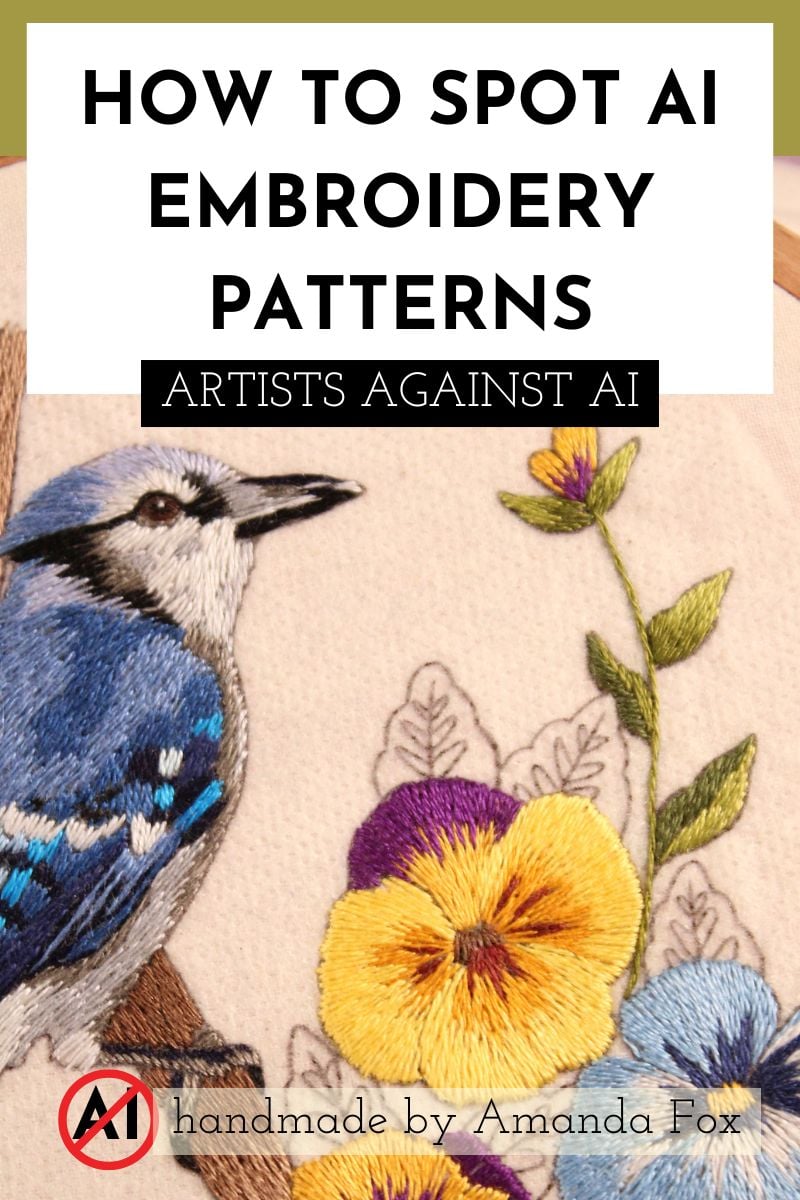
Take A Look At The Shop As A Whole
If possible, look at the shop as a whole. Do the patterns look like they are cohesive stylistically or do they appear to be all over the place? Many AI generated shops don’t have a particular style.
While some shops won’t disclose their use of AI on individual listings, some will in their about section of their shop. Don’t forget to look there!
How many products does the shop have? Many AI shops have a large collection of products, usually 200-300+. On Etsy, you can see how long the shop has been open. It is generally unrealistic to have hundreds of hand embroidery patterns in a shop when it has only been around for a year.
Many AI shops sell their entire shop’s catalog as one big bundle. “600 patterns for $17!” This is a dead giveaway. In fact, most shops that make real patterns won’t sell a large amount of patterns (i.e. 80 patterns) in a bundle, so I recommend ignoring those products completely.
Vet Individual Products
First, read the description carefully. Sometimes it will say that the pattern only includes a traceable design and instructions for making embroidery stitches. While minimal instructions are often sufficient for items such as transferable embroidery designs that are simply line drawings (for example, stick and stitch designs), this is not the case for embroidery patterns that appear to be finished. If the product features a finished embroidery in the listing photo, but the pattern does not include step by step photos and instructions, there is a good chance that the product is AI-generated and the shop owner has not stitched the design themselves.
Here are some more red flags to look out for:
- The photos appear to have perfect lighting. (i.e., minimal shadows, even lighting)
- The embroidery looks almost dream-like, and the stitches appear to be very dimensional, nearly too perfect.
- The embroidery stitches are bending/curving in an unrealistic way.
- If included, there may be a generic video of someone embroidering that has nothing to do with the design being sold.
- The background is generic, or there are multiple photos of the same design on different generic backgrounds all at a similar angle.
- When you zoom in on the image, the grain of the fabric appears distorted or warped, and the embroidery hoop looks smooth and slightly too flawless.
- In some photos, the embroidery stitches may have exaggerated holes along the edges of the stitches, while other designs may appear to be mocked up or pasted onto the fabric.
- Look for embroidery patterns that feature photos taken at different angles, close-ups, as well as images captured at various stages of the creation process. Most people take the time to do this if they have created an authentic piece of art!
- Some shops have started to label their work as “AI Free” which makes it much more convenient and easy to identify authentic patterns.
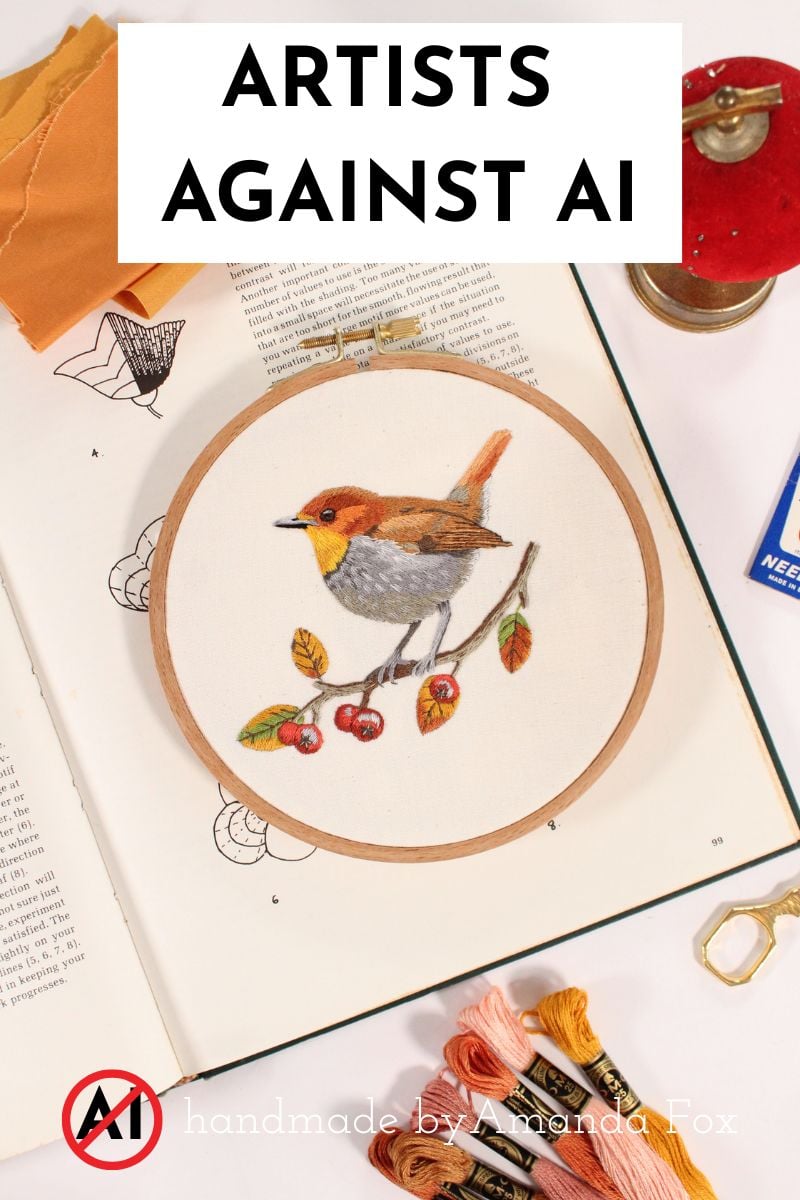
Look at Social Media
Does the shop or artist have a social media presence? If so, do they post progress photos of their embroidery work? A strong social media presence that includes pictures of the artist and their embroidery work, whether partially completed or in progress, is an excellent indicator that the designs are authentic.
Additionally, although this is not always the case, many AI shops are relatively anonymous and don’t feature pictures of the artists in their shops or on their social media profiles.
Check Reviews
Reviews are a great resource when you’re shopping for patterns. Do the customers’ finished designs resemble the product photo? Are the reviews generally good?
Try to find reviews from people who have already embroidered the pattern to see how they liked the instructions. If you’re lucky, someone may explicitly note that the pattern is AI.
Turn Of GenAI On Pinterest
If you like to browse on Pinterest, but you’re sick of seeing AI photos, there is a way to turn off GenAI in your Pinterest setting. While this won’t completely eliminate AI in your feed, it should decrease the amount you will see which helps!
Keep Handmade Human!
I hope this helps you in while you’re looking for embroidery patterns! Please leave a comment if you have a particular tip that I didn’t include.
My goal is to continue to be vocal about the importance of keeping handmade arts and crafts human. For me, AI has no place in the embroidery process!
And if you’re looking for real, authentic embroidery patterns, check out some of the products below. As always, happy stitching!
Handmade Embroidery Patterns
-
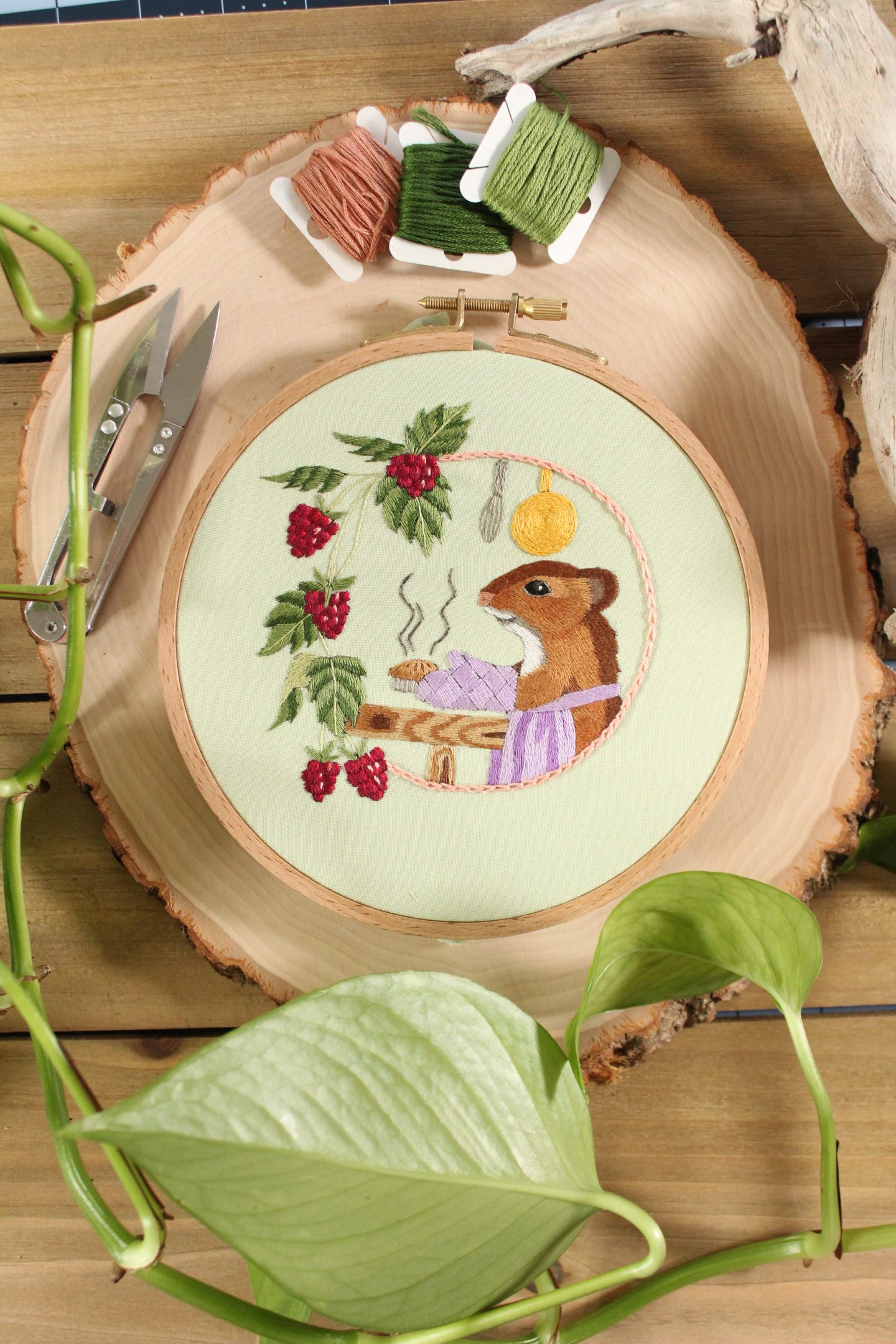
Baking Mouse Embroidery Pattern
Original price was: $10.00.$9.00Current price is: $9.00. -
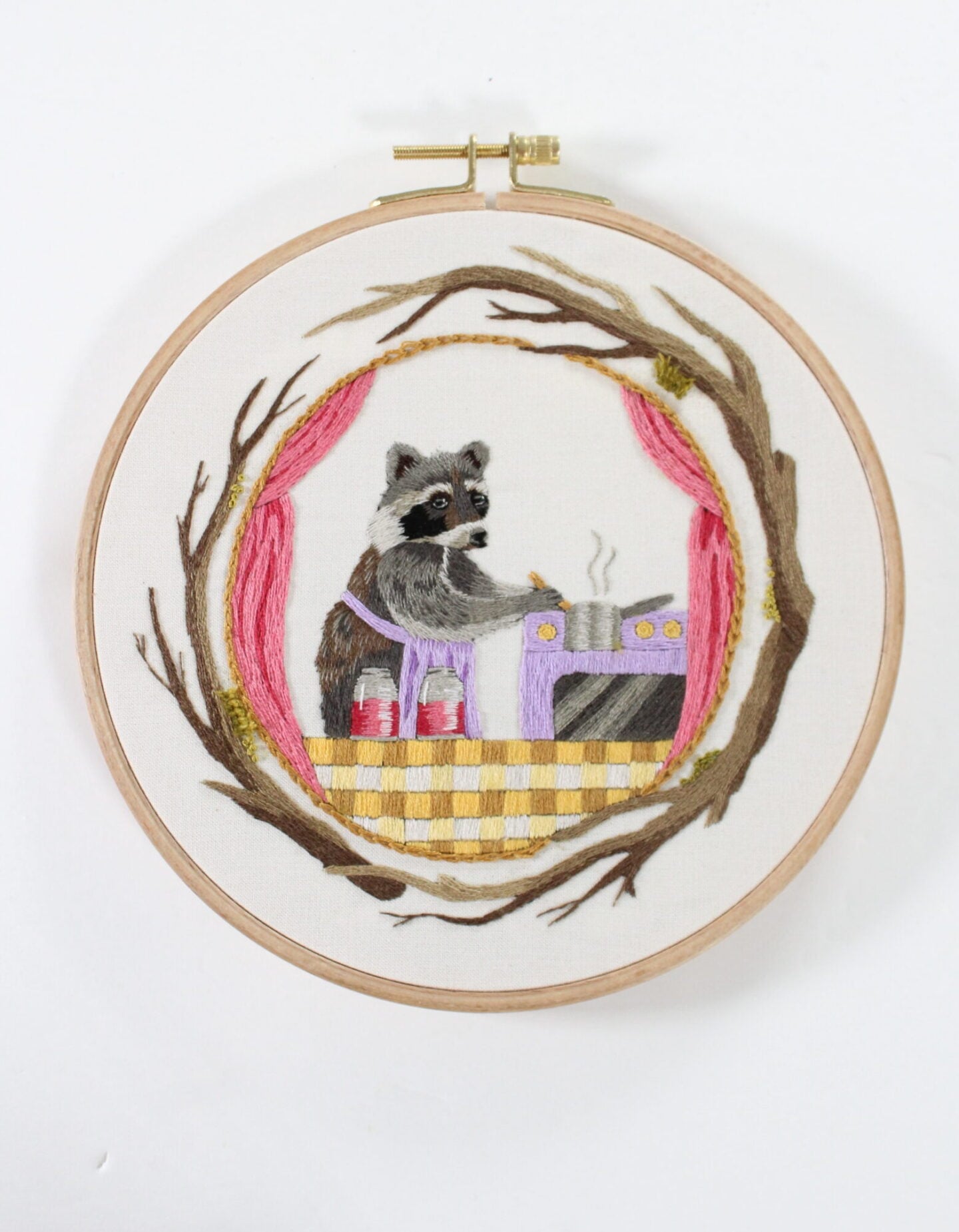
Raccoon Embroidery Pattern
Original price was: $10.00.$9.00Current price is: $9.00. -
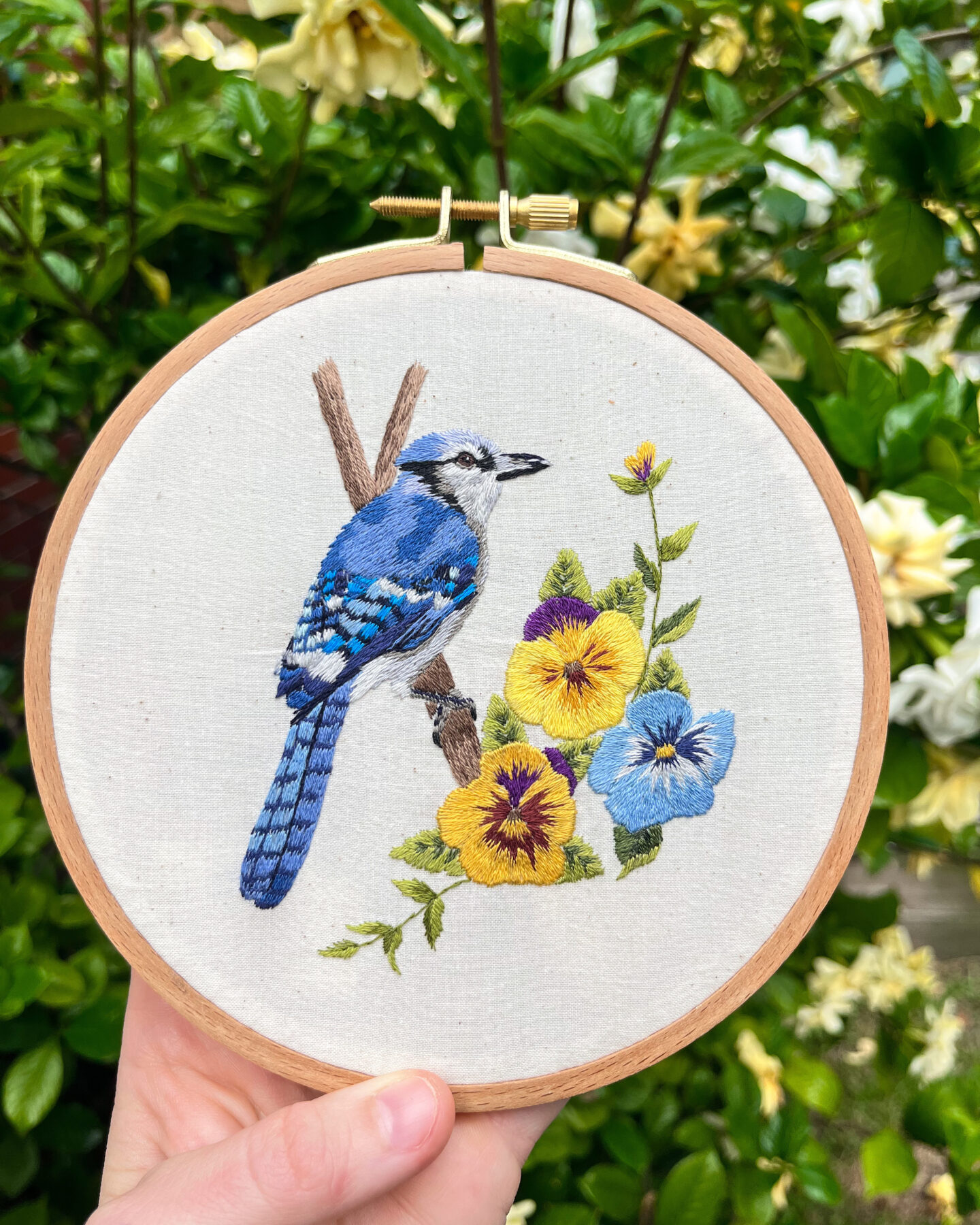
Blue Jay Thread Painting Embroidery Pattern
Original price was: $10.00.$9.00Current price is: $9.00. -

Embroidering Mouse Embroidery Pattern
$10.00

No AI Embroidery Artists


![How Many Strands Of Embroidery Floss To Use [Take The Quiz!]](https://crewelghoul.com/wp-content/uploads/2024/02/how-many-strands-of-floss-to-use.jpg)

Thank You Amanda, I hadn’t even thought about AI in embroidery. 🙁 von