Cross Stitch Terms (Helpful Lingo To Know!)
If you’ve spent time on Flosstube or cross-stitch forums, you may have come across a lot of unfamiliar terms. This page helps you learn the lingo so you can get up to speed on all things cross stitch!
General Cross Stitch Lingo
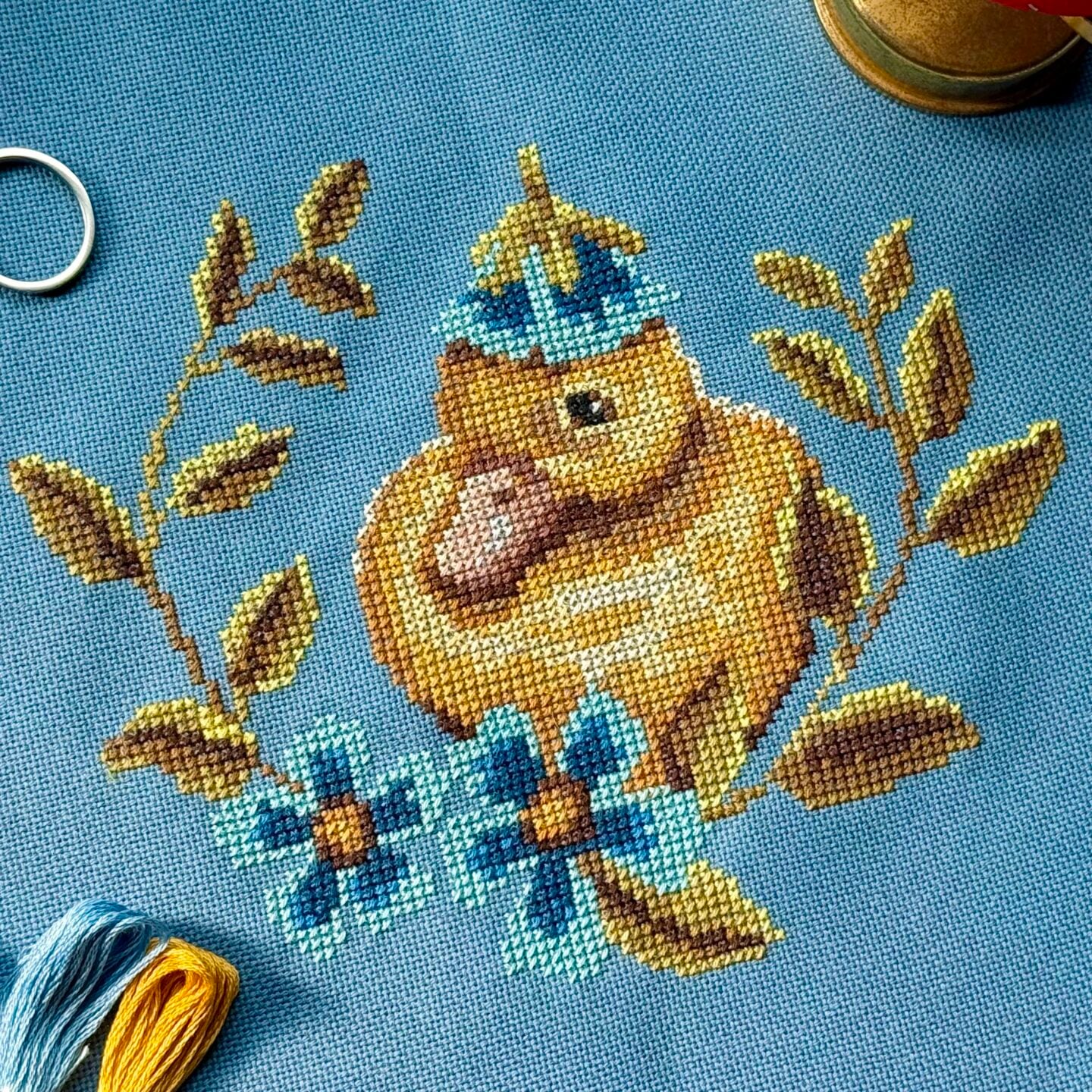
- FFO – short for fully finished object, a project that is framed or sewn together into a usable or displayable cross stitch piece
- Kitted up – gathering all of the fabric, thread, and supplies needed for a particular cross stitch project
- Paper chart – printed cross stitch pattern on a piece of paper, often comes in physical cross stitch kits
- Pattern Keeper – an application that you can use to upload PDF patterns to keep track of a pattern as you stitch
- SAL – short for stitch-along; artists will host these and release portions of a design for everyone to stitch together
- UFO – short for unfinished object
- WIP – short for projects that are a work in progress
Fabric Terms
- Aida – a popular fabric used in cross stitch that has even, visible thread blocks, making it great for beginners
- Evenweave – an evenly woven fabric that looks slightly similar to linen, which is usually made of a blend of cotton and synthetic materials, sometimes also referred to as Lugana
- Linen – a popular plain-weave fabric used in cross stitch that is made from flax plants
- Thread count – the number of threads per square inch in fabrics
Learn more about cross stitch fabrics.
Thread-Related Terms
- Bobbins – small pieces of wood, plastic, or paper used to wind thread for storage.
- Color Code – a number or value assigned to a particular thread color, usually unique to a particular thread brand.
- Cording – twisted thread used for the edging or border of cross-stitch projects.
- DMC – a popular, widely used embroidery thread brand.
- Floss – embroidery thread that usually contains 6 divisible strands.
- Floss Drops – a tag made of wood, plastic, or paper used to store a length of embroidery floss.
- Orts – remnants or bits of unused thread or fabric.
- Skein – a loosely wound length of embroidery floss, usually about 8 meters in length.
- Variegated – thread that has variation in shade or color.
Learn more about embroidery thread.
Needles, Frames & Accessories
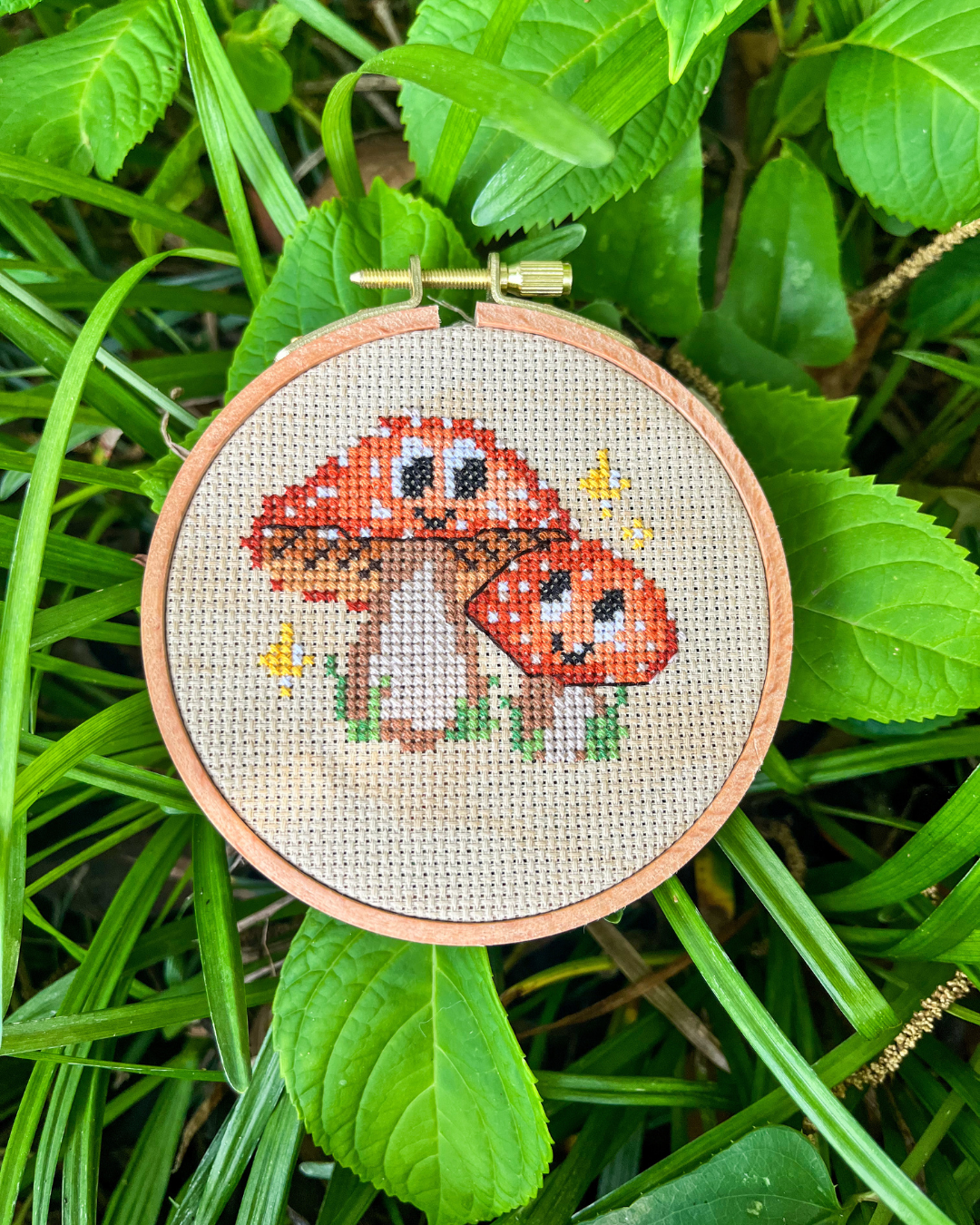
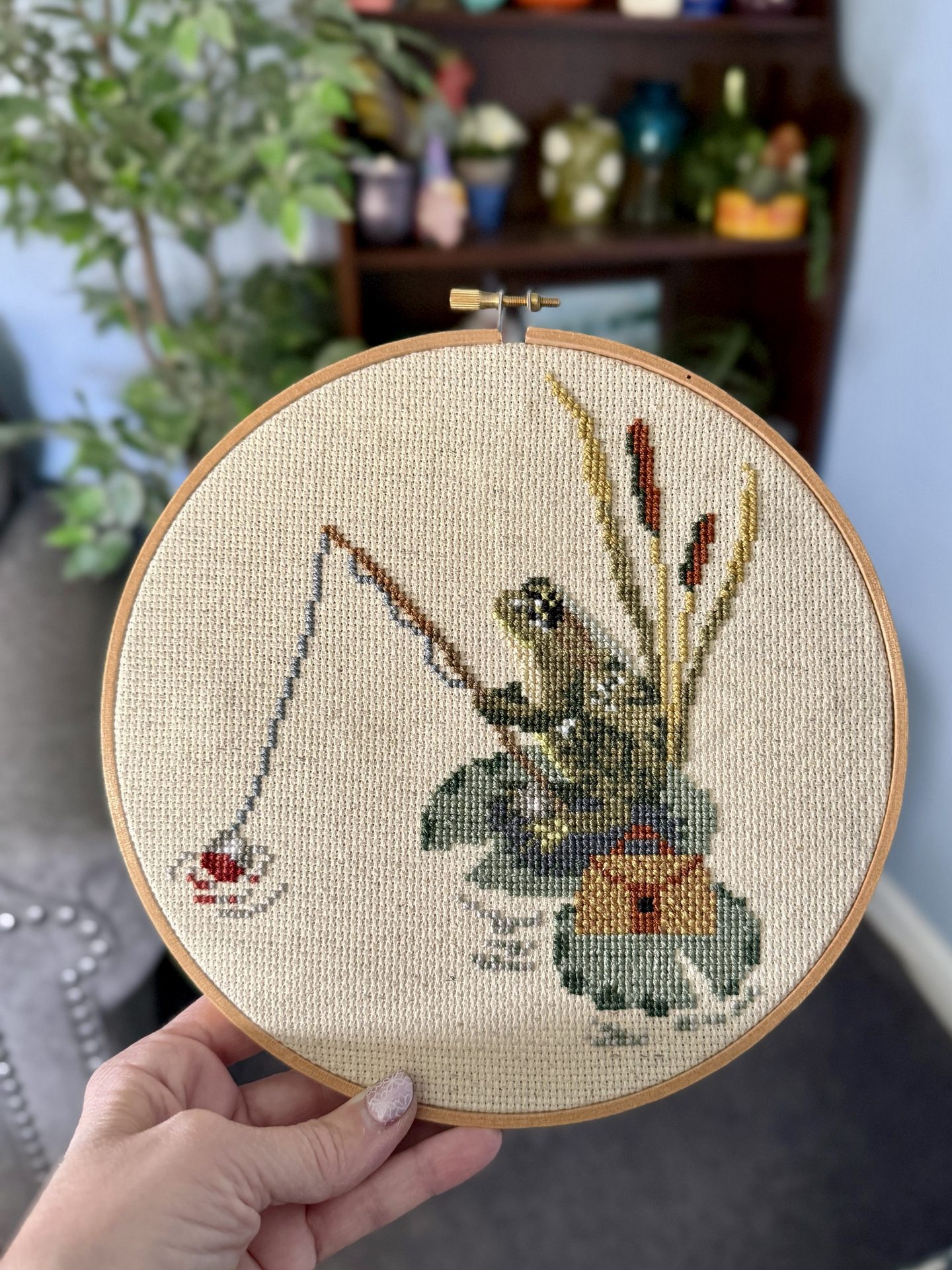
- Embroidery hoop – a circular tool, usually made of wood or plastic, used to secure the fabric for stitching.
- Embroidery needle – a sharp needle with a larger, oval eye.
- Q-snap frame – a square plastic frame that has pieces that clamp along all four sides, used to stabilize the fabric while stitching.
- Scroll frame – often made of wood, this frame has bars that stretch the fabric for stitching. The fabric is rolled onto the bars, similar to a scroll.
- Tapestry needle – a blunt needle with an elongated eye.
- Thread conditioner – usually made of beeswax, helps to smooth the thread, making it easier to stitch with and thread the needle.
Stitching Specific Terms
- Back stitch – an embroidery stitch commonly used to outline details in a pattern (check out this back stitch tutorial).
- Confetti – single cross stitches of a particular color without blocks of the same color close by.
- Danish Method – a method of making cross stitches that involves making half cross stitches first in a particular area, then going back and adding the full cross stitch all at once.
- English Method – making each full cross stitch before moving onto the next stitch.
- Frogging – undoing stitches due to a miscount or mistake.
- Full cross / full stitch – one full cross stitch, meaning a stitch with 2 legs crossing over one another.
- French knot – an embroidery stitch that forms a small knot, occasionally used for small details in a pattern.
- Full coverage – cross stitch designs that completely cover the fabric.
- Ghosting – when the thread is too close to the fabric color, making it blend into the background.
- Gridding – marking the fabric with a marker, pen, or thread to help count your stitches (check out this gridding tutorial).
- Half stitch – a stitch that is half of a cross stitch, one diagonal stitch.
- Loop start – a method for starting thread neatly without leaving a tail along the back of the work (learn the loop start).
- One over one, two over two – describes how much floss and across how many threads you make the stitches. For example, one strand over one thread of the fabric, or two strands over two threads.
- Parking – placing the thread where you need to stitch next; often helpful when working with lots of different colors.
- Pin stitch – an anchoring stitch to start the thread that doesn’t leave a tail along the back (learn the pin stitch).
- Railroading – a method that helps the thread stay flat and neat when working with multiple strands (see railroading tutorial).
- Stitch count – the total number of stitches in a cross stitch pattern.
- Stitching in-hand – stitching without a hoop or frame (learn the sewing method).
- Thread chicken – stitching until the working thread is very short and you barely any thread left.